Relational Psychodynamic Therapy
Something brought you to therapy. Maybe you know exactly what it is. Maybe you've been carrying it so long you've stopped being able to name it, only feel it, as a weight, a distance, a recurring pattern you can't seem to break no matter how hard you try.
A lot of people come to me having already tried therapy before. They've done the worksheets. They've learned the coping skills. They've worked hard. And still something remains untouched, some deeper layer that never quite got reached.
That layer is often where relational psychodynamic therapy lives.
As a Certified Relational Psychodynamic Therapist practicing in Seattle, I work with what's beneath the surface, not just the symptoms you can name, but the relational world that shaped you, the unconscious patterns that drive you, and the wounds that never fully healed because they were never fully seen. This is depth work. It is slow, careful, and it goes somewhere that symptom management alone rarely can.
What Is Relational Psychodynamic Therapy?
Relational psychodynamic therapy is a contemporary approach to psychotherapy rooted in the long tradition of psychoanalytic thought, but oriented toward something that older models sometimes missed: the centrality of relationship in both how we are wounded and how we heal.
The core understanding is simple, but its implications run deep. We are not formed in isolation. We are imagined in relationship, conceived in relationship, born into relationship, and shaped through every significant connection we have ever had. The people who raised us, the losses we have endured, the ways we learned to protect ourselves from pain, all of these live on inside us, often without our awareness, and show up in how we relate to the world, to others, and to ourselves.
Relational psychodynamic therapy takes all of that seriously. Rather than focusing narrowly on symptom reduction or behavioral change, it asks a deeper question: what is the meaning of this suffering? What has shaped it? And what would it look like to truly move through it, rather than around it?
The Roots of This Approach
Relational psychodynamic therapy draws from a rich tradition of psychoanalytic and psychodynamic thought, updated and deepened by decades of relational and intersubjective theory.
At its foundation is the recognition that the unconscious is real, that what we cannot see in ourselves still drives us, that the defenses we built to survive earlier experiences often become the very things that limit our lives later on. Concepts like projection, displacement, transference, and countertransference are not abstract clinical terms. They are descriptions of real, lived experiences that happen between people all the time, including between a client and a therapist.
What makes relational psychodynamic therapy distinct from older analytic models is its emphasis on the therapeutic relationship itself as a vehicle for healing. The connection between therapist and client is not merely a backdrop for the work. It is the work. When two people meet genuinely, with honesty, curiosity, and care, something becomes possible that insight alone cannot provide.
As the Contemporary Psychodynamic Institute, where I completed my certificate training, describes it: we are conceived in relationship, formed in relationship, harmed in relationship, and transformed through relationship. That sentence is not just a philosophy. It is a clinical orientation that shapes every session I have with a client.
What This Looks Like in the Room
Relational psychodynamic therapy is not directive. I am not here to tell you what you should feel, how you should think, or what you should do differently. I am here to be genuinely present with you, to listen carefully to what you are saying and what you are not saying, and to follow the threads of meaning that emerge between us.
We will explore your history, not to blame the past, but to understand it. We will look at the patterns that keep repeating in your relationships, your work, your inner life. We will pay attention to what happens in the room between us, because often the most important material surfaces right there, in real time, in how you relate to me and how I relate to you.
This kind of therapy requires patience. It is not a quick fix, and I won't pretend otherwise. But it is the kind of work that reaches the places that nothing else has. And in my experience, that is where real and lasting change becomes possible.
Each person who comes to me carries a unique stamp of existence, their own form of suffering, their own history, their own way of moving through the world. This approach honors that uniqueness. There is no template here, no manualized protocol. The therapy grows out of who you are and what you bring.
The Role of the Unconscious
One of the central ideas in relational psychodynamic therapy is that much of what drives us happens outside of our conscious awareness. The defenses we developed early in life, the relational patterns we absorbed before we had words for them, the ways we learned to manage pain and protect ourselves, these do not disappear simply because we want them to. They operate quietly in the background, shaping our choices, our reactions, and our relationships in ways we often can't see.
This is not a character flaw. It is simply how the human mind works. We all carry an inner life that is more complex and layered than what we are consciously aware of. And often, the symptoms that bring someone to therapy, the depression, the anxiety, the relationship difficulties, the feeling that something is wrong but you can't put your finger on what, are the surface expressions of something deeper and older.
Relational psychodynamic therapy creates space to explore that depth. Not by forcing it open, but by building enough trust and safety that the deeper material can gradually surface and be worked with, in relationship, with care.
My Training and Certification
I completed my post-graduate training in Relational Psychodynamic Therapy through the Contemporary Psychodynamic Institute in Seattle, a rigorous two-year certificate program grounded in immersive experiential learning, clinical consultation, and deep engagement with relational and psychoanalytic theory.
The program is built on the understanding that an enlivened therapist enlivens the therapy, which enlivens the client. The learning was not top-down or didactic. It was relational through and through, conducted in cohort, grounded in case consultation, and oriented toward developing the therapist's own presence and authenticity as the primary clinical tool.
This training, combined with my Master's degree in Psychology from Seattle University's Existential and Phenomenological Psychology program, forms the theoretical and experiential foundation of my practice. I bring both the depth of psychoanalytic tradition and the warmth of the existential and humanistic traditions to my work with clients.
I am a Certified Relational Psychodynamic Therapist, and this approach is at the center of how I work with every client I see, whether they come to me for individual therapy, trauma work, or support navigating a life that has become too heavy to carry alone.
Who This Approach Is For
Relational psychodynamic therapy in Seattle is well-suited for people who are looking for something deeper than symptom management. It tends to be particularly valuable for people who have tried other forms of therapy and found that something was still missing; those carrying complex or relational trauma, including childhood neglect, emotional abuse, or experiences of loss and abandonment; individuals living with depression, anxiety, or a persistent sense of emptiness that hasn't responded fully to other approaches; people who find themselves repeating the same relational patterns, in relationships, at work, in their inner life, and want to understand why; those navigating life with a chronic illness, a disability, or grief that has reshaped who they are; and anyone who senses that their past is not as past as they would like it to be.
You don't need to come in with a diagnosis or a clearly articulated problem. You only need to come in.
Why This Approach, and Why It Matters to Me
I came to relational psychodynamic therapy not just through training, but through my own experience of what it means to be profoundly changed by a relationship.
Before I became a therapist, I went through a period of devastating loss, the loss of my eyesight to a rare degenerative retinal condition, a suicide attempt, and a long and difficult journey back toward a life worth living. What healed me was not a technique. It was a relationship. A therapist who sat with me in genuine presence, who held my hopelessness without flinching, and who waited with me, patiently, for something to shift.
That experience taught me something I have never forgotten: that we are not healed in isolation. We are healed in relationship. And that the deepest transformation available to any of us happens not when someone fixes us, but when someone genuinely meets us.
That is what I try to offer every person who comes through my door. Not answers. Not a protocol. Genuine encounter, and the kind of presence that makes it possible for real change to happen.
Frequently Asked Questions
What makes relational psychodynamic therapy different from CBT or other short-term approaches?
CBT and similar approaches focus primarily on changing thought patterns and behaviors, and they can be very effective for specific, well-defined concerns. Relational psychodynamic therapy works at a different level, exploring the deeper relational and unconscious roots of suffering. It tends to be more open-ended, more exploratory, and oriented toward understanding rather than symptom reduction alone. For many people, especially those with complex histories, it reaches what other approaches have not.
Is this approach only for people with serious trauma?
Not at all. While relational psychodynamic therapy is well-suited for trauma, it is equally valuable for anyone who wants to understand themselves more deeply, break long-standing patterns, or find more meaning and aliveness in their life. You don't have to have had a dramatic or identifiable trauma for this work to be meaningful.
How long does relational psychodynamic therapy typically take?
This varies widely depending on what you're working on and what you're hoping for. Some people find significant benefit within several months. Others find that a longer engagement allows them to reach deeper layers of change. We talk about this openly and regularly, and the pace and duration of the work are always something we decide together.
Do you integrate other approaches alongside relational psychodynamic therapy?
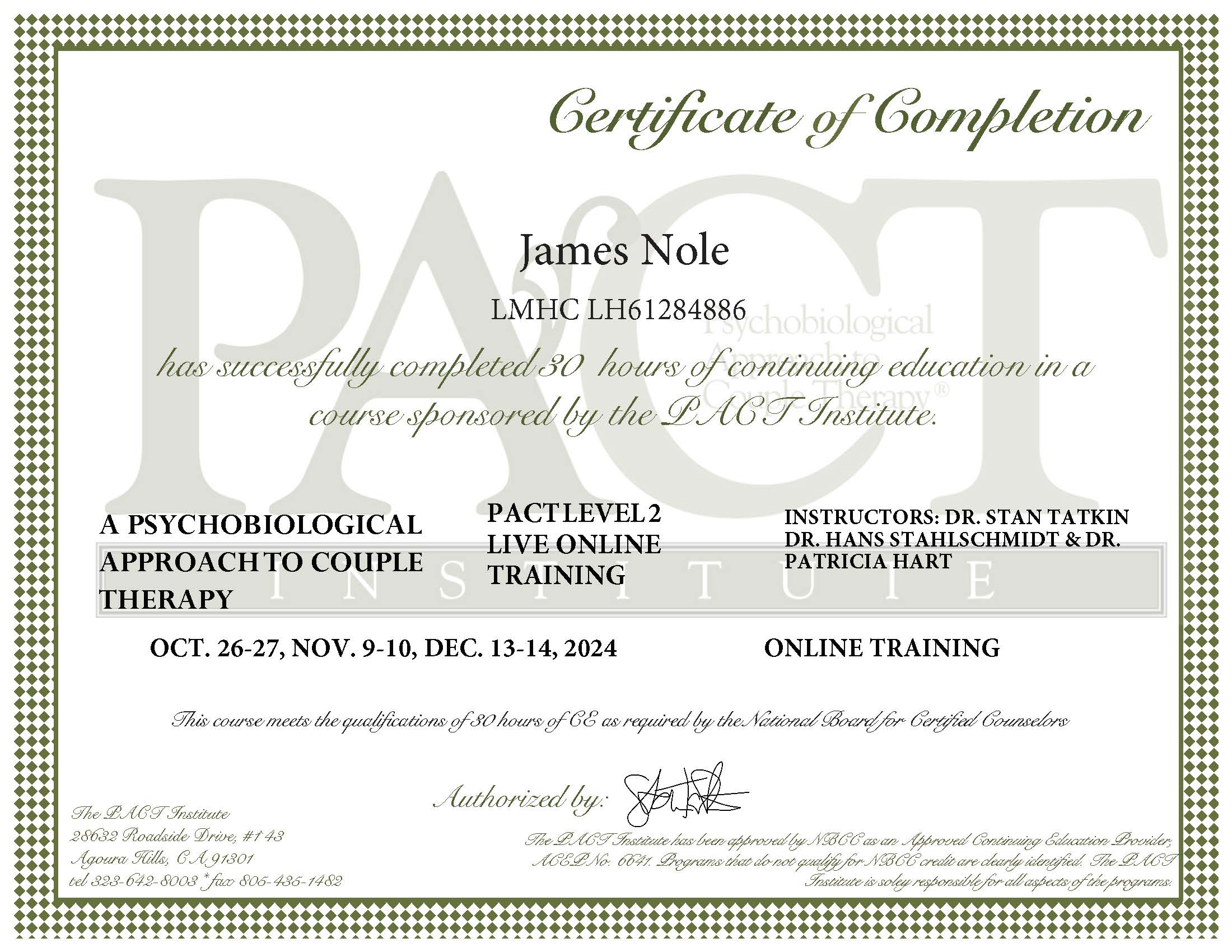
Yes. My training also includes Deep Brain Reorienting, PACT couples therapy, clinical hypnosis, and work with trauma and dissociation. I draw on these as the clinical picture calls for them. Relational psychodynamic therapy is the foundation, but it is not a rigid frame. The work adapts to what each person needs.
Do you offer relational psychodynamic therapy via telehealth?
Yes. I offer both in-person sessions at my Pioneer Square office in Seattle and telehealth sessions for clients throughout Washington State.
I've been in therapy before and felt like it didn't go deep enough. Could this be different?
That is one of the most common things I hear. Many people come to me after years of work that was helpful but didn't quite reach what they were most needing. Relational psychodynamic therapy is designed precisely for that kind of depth. I'd encourage you to reach out and share what your experience has been. We can talk honestly about whether this might be a better fit.
Closing
If something in these words resonates with you, if you sense that the work you need is deeper than what you've found so far, I'd encourage you to reach out.
A free 30-minute consultation is a no-pressure opportunity to share what's bringing you here, ask questions, and get a feel for whether working together makes sense. There's no obligation, and no need to have it all figured out before you call.
Conditions I treat with this: therapy for depression, trauma & C-PTSD therapy.
Related reading: What Is Relational Psychodynamic Therapy?; 12 Key Aims in Relational Psychodynamic Therapy; and The Core Competencies of Relational Psychodynamic Therapy.