Psychoanalytic Psychotherapy
There is a particular kind of exhaustion that comes from working hard on yourself and still finding the same things waiting for you.
The same argument that surfaces in every relationship. The same moment of self-sabotage right when something good is within reach. The same feeling you cannot quite name or shake, no matter how much you understand about where it comes from. You have reflected. You have tried. And something keeps moving beneath the surface, just out of reach, shaping things in ways you cannot fully see or stop.
That something has a name in psychoanalytic psychotherapy. It is the unconscious. And rather than something to be afraid of or ashamed of, it is simply the part of you that has not yet had the right conditions to be seen.
Psychoanalytic psychotherapy is built for exactly this. Not for the surface of behavior or the thoughts you can already identify, but for the deeper architecture of the self, the patterns formed before you had words for them, the defenses built to survive experiences that were too much to fully feel, the relational wounds that have been quietly running in the background of your life ever since.
This is one of the oldest forms of depth work we have. It has been continuously evolving for over a century. And for the right person, at the right moment, it does not just help you feel better. It changes who you are.
What Is Psychoanalytic Psychotherapy?
Psychoanalytic psychotherapy is an approach to healing rooted in more than a century of clinical theory and practice, beginning with the foundational work of Sigmund Freud and developed across generations of thinkers including Melanie Klein, Donald Winnicott, Heinz Kohut, and the relational and intersubjective theorists of the late twentieth century who brought this tradition into its contemporary form.
At its core, psychoanalytic psychotherapy rests on a conviction that is both simple and radical: that much of what drives us happens outside of conscious awareness. The choices we make, the relationships we find ourselves in, the ways we protect ourselves from pain, the patterns that keep repeating, these are not simply the result of what we think or consciously intend. They are shaped by an inner world that is older, deeper, and more complex than what we can access through reflection alone.
Psychoanalytic psychotherapy creates the conditions in which that inner world can become more visible. Not through interpretation imposed from outside, but through the careful, patient work of a genuine therapeutic relationship, one in which what has been unconscious can gradually surface, be seen, and begin to shift.
My approach draws on my training as a Certified Relational Psychodynamic Therapist through the Contemporary Psychodynamic Institute, as well as my Master's degree from Seattle University's Existential and Phenomenological Psychology program. I bring both the full depth of the psychoanalytic tradition and the warmth of the relational and humanistic traditions to this work.
The Unconscious and Why It Matters
The concept of the unconscious is psychoanalysis's most enduring and most misunderstood contribution to human self-understanding.
The unconscious is not simply a storage room for forgotten memories. It is an active, dynamic dimension of the mind that is constantly shaping how we perceive, feel, and relate. It holds the relational patterns we absorbed in childhood before we had language for them. The defenses we built to protect ourselves from early experiences of pain, abandonment, or shame. The parts of ourselves we learned to hide or disown because they felt too dangerous to show. The feelings we cannot quite let ourselves feel.
These unconscious contents do not stay put. They find their way into our lives through the patterns that keep repeating, through what we avoid and what we are drawn toward, through the ways we relate to the people closest to us, and through what happens in the space between a therapist and a client in the room.
Psychoanalytic psychotherapy takes the unconscious seriously as the site where real change becomes possible. Not by explaining it away, but by building a relationship in which its contents can gradually emerge and be worked with, safely, carefully, and over time.
Key Concepts in Psychoanalytic Psychotherapy
Understanding a few of the central concepts in this tradition helps clarify how the work actually unfolds.
Defense Mechanisms. Defenses are the ways the mind protects itself from feelings or truths that feel threatening or unbearable. Repression, projection, displacement, rationalization, idealization, reaction formation, these are not pathologies. They are natural and often creative adaptations to difficult experiences. But when defenses that once protected us become the walls that limit us, psychoanalytic work creates the space to look at them honestly, understand where they came from, and gradually loosen their grip.
Transference. Transference is the experience of relating to someone in the present through the lens of significant relationships from the past, most often early attachment figures. In therapy, transference emerges in how a client relates to the therapist, and it contains some of the most important material available for understanding how the past continues to shape the present. Rather than something to be corrected, transference is a living map of the relational patterns that have formed a person's inner world.
Countertransference. Countertransference refers to what arises in the therapist in response to the client. In contemporary relational psychoanalytic practice, countertransference is not a problem to be managed or eliminated. It is a source of crucial clinical information about what the client is communicating at levels that go beyond words. My training and ongoing attention to my own inner experience in sessions is central to how I use this material in service of the work.
Repetition and Working Through. People often come to therapy when they have run up against the same pattern one too many times. The same relational dynamic, the same wound, the same moment where something breaks down. In psychoanalytic work, these repetitions are not failures. They are the unconscious attempting to find a new resolution to something that was never resolved. The work of therapy is to recognize these repetitions, understand their roots, and find a new way through them rather than around them.
How the Relational Turn Changed Everything
Classical psychoanalysis positioned the therapist as a neutral, detached observer, a blank screen onto which the patient's unconscious material could be projected. Contemporary relational psychoanalytic practice has moved decisively away from that model.
The relational turn in psychoanalysis, shaped by thinkers including Stephen Mitchell, Jessica Benjamin, Lewis Aron, and the intersubjective theorists, recognized something essential: that therapy is not a one-person psychology but a two-person psychology. The therapist is not outside the process looking in. The therapist is always already inside it, shaped by what the client brings, contributing to what unfolds between them, and responsible for using that participation honestly and in service of the client's healing.
This changes everything about how the work is conducted. Rather than detached interpretation, the relational approach emphasizes genuine encounter. Rather than withholding the therapist's personhood, it recognizes that the therapist's authentic presence is itself a therapeutic tool. Rather than a fixed hierarchy of expert and patient, it holds the therapeutic relationship as a collaborative and mutually influencing process.
This is the tradition I work within. The approach I have trained in through the Contemporary Psychodynamic Institute is rooted in this relational and intersubjective understanding. What I bring to psychoanalytic psychotherapy in Seattle is not the distant analyst of another era but a genuinely present human being, willing to engage honestly with whatever unfolds between us.
What Psychoanalytic Psychotherapy Sessions Look Like
Psychoanalytic psychotherapy does not follow a script. There are no worksheets, no homework assignments, no predetermined agenda for each session. What drives the work is what you bring, what surfaces between us, and where the material leads.
Sessions typically begin with what is present for you, what has happened since we last met, what is on your mind, what you find yourself wanting to talk about or avoiding. I follow your lead, listening not just to the content of what you say but to the texture beneath it, to what seems to want to be said but has not been, to the emotional undercurrents that run beneath the surface of the narrative.
I am not a passive listener. Courageous speech and what the relational psychoanalytic tradition calls disciplined spontaneity are central to how I work. This means I speak to what matters, including what might be difficult or uncomfortable to name. Not to provoke, but because genuine engagement, the kind that actually moves something, requires a willingness to say the true thing rather than the easy one.
We will pay attention to patterns as they emerge, both the patterns of your life outside the room and the patterns that surface inside it. We will follow threads from the past into the present and notice how old relational dynamics show up in new contexts. We will sit with what is uncomfortable long enough for it to yield something, rather than rushing past it toward relief.
This is unhurried work. It asks something of you, and it asks something of me. But it is the kind of work that reaches the places that nothing else has.
My Training and Credentials
My training in psychoanalytic psychotherapy is both formal and ongoing.
I hold a Master's degree in Psychology from Seattle University's Existential and Phenomenological Psychology program, one of the few graduate training programs in the country grounded entirely in depth-oriented, humanistic approaches to the mind and the therapeutic relationship.
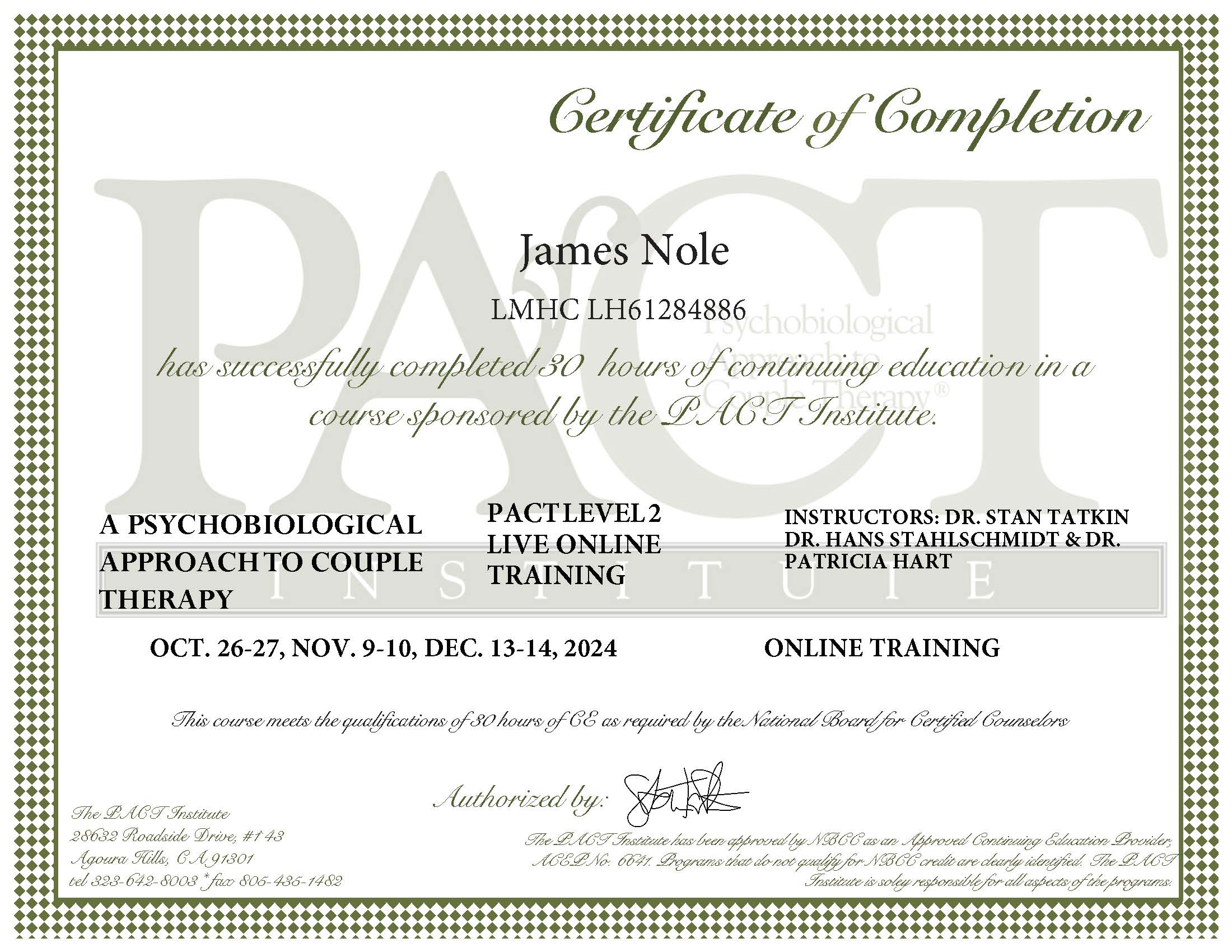
I am a Certified Relational Psychodynamic Therapist through the Contemporary Psychodynamic Institute in Seattle, a rigorous post-graduate training program grounded in immersive experiential learning, clinical consultation, and deep engagement with the full breadth of relational and psychoanalytic theory. The training was conducted in cohort over two years, rooted in the conviction that an enlivened therapist enlivens the therapy, and oriented toward developing the therapist's own presence and authenticity as the primary clinical instrument.
I have also written extensively about psychoanalytic concepts through my ongoing blog series on displacement, projection, idealization, reaction formation, identification, transference, and other core ideas from the tradition, bringing them into plain language for a general audience. This body of writing reflects not just academic familiarity but genuine and ongoing engagement with these ideas as living clinical tools.
My psychoanalytic work is integrated with my other training in Deep Brain Reorienting, clinical hypnosis, and existential and phenomenological psychology. These approaches share a common orientation: that healing requires going where the wound actually lives, and that the therapeutic relationship is the primary vehicle through which that journey becomes possible.
Who Psychoanalytic Psychotherapy Is For
Psychoanalytic psychotherapy in Seattle tends to resonate most deeply with people who are ready for something more than symptom management and who sense that their difficulties are rooted in something older and deeper than their present circumstances.
It may be particularly meaningful for people who find themselves repeating the same relational patterns across different relationships and cannot understand why; those who have been in therapy before and felt that something was never quite reached; individuals carrying complex or relational trauma, including childhood experiences of neglect, emotional abuse, or early attachment disruption, where the wound formed before language was available to describe it; people who feel a persistent sense of something wrong, an emptiness, an anxiety, a depression that seems to have no adequate external explanation; those who are drawn to depth and self-understanding, who want to know not just what they feel but why, and what it means; and anyone who senses that the self they present to the world is not the whole story, and who wants to understand what else is there.
You do not need to know anything about psychoanalytic theory to benefit from this work. You need only the willingness to show up honestly and stay curious about what emerges.
Frequently Asked Questions
How is psychoanalytic psychotherapy different from CBT?
CBT focuses primarily on identifying and changing thought patterns and behaviors that are causing distress. It tends to be structured, time-limited, and symptom-focused. Psychoanalytic psychotherapy works at a different level, exploring the unconscious roots of symptoms, the relational patterns that formed them, and the deeper character structure of the person. For people whose difficulties have not responded fully to more structured approaches, or who are looking for change at a deeper level, psychoanalytic work often reaches what CBT cannot.
Is psychoanalytic psychotherapy just talking about my childhood?
Not exactly. The past matters in psychoanalytic work because the past lives in the present, in the patterns we carry, the defenses we rely on, the ways we relate. But the work is as much about the present as the past, including what happens in the room between us in real time, which often carries the most alive and important material. The past is explored not as an end in itself but as a way of understanding and freeing the present.
How long does psychoanalytic psychotherapy take?
Psychoanalytic psychotherapy is by nature a longer-term engagement than more structured approaches. The depth of change it makes possible tends to require time. That said, meaningful shifts can happen relatively early, and the work is not endless. We talk regularly about how things are going and what feels right in terms of pace and duration. There is no predetermined endpoint.
Is this approach evidence-based?
Yes. A substantial and growing body of research supports the effectiveness of psychoanalytic and psychodynamic psychotherapy across a wide range of conditions, including depression, anxiety, personality difficulties, and complex trauma. Importantly, research has found that the gains made in psychodynamic therapy tend to continue growing after treatment ends, an effect not consistently seen in more structured approaches. The absence of a manualized protocol does not mean the absence of evidence. It means the evidence is applied through relationship and clinical judgment.
Can psychoanalytic psychotherapy be done via telehealth?
Yes. I offer both in-person psychoanalytic psychotherapy sessions at my Pioneer Square office in Seattle and telehealth sessions for clients throughout Washington State. The relational depth of this work translates well to the online setting, and many clients find that the continuity of a consistent therapeutic relationship matters far more than the medium through which it is conducted.
What if I have tried therapy before and it did not help?
That is one of the most common things I hear. Many people come to psychoanalytic work after other approaches reached a certain depth and then stopped. The unconscious material that drives most of the patterns people struggle with is not always accessible through more structured or surface-level interventions. If something has remained untouched despite genuine effort, that is often a signal that deeper work is needed, not that change is impossible.
Closing
If you are looking for a therapy that goes all the way down, that takes seriously not just your symptoms but the whole of who you are and how you came to be that way, I would encourage you to reach out.
A free 30-minute consultation is a no-pressure way to share what is bringing you here, ask questions, and get a sense of whether this kind of depth work might be what you have been looking for.
Conditions I treat with this: trauma & C-PTSD therapy.
Related reading: Transference in Psychotherapy; What Is Projection?; and Repetition and Working Through.