Deep Brain Reorienting (DBR)
Some trauma doesn't respond to talking about it. You can tell the story. You can understand it intellectually. You can work through it in session after session. And still something remains, a tightness in the chest that won't release, a startle response that fires before you can think, a body that stays braced long after the danger has passed.
That is not a failure of effort or willingness. It is a sign that the trauma is being held somewhere that words and conscious processing have not yet reached.
Deep Brain Reorienting, or DBR, is a trauma therapy designed specifically to work at that level. Not from the top down, not through the story or the meaning or the cognitive understanding of what happened, but from the bottom up, beginning at the brainstem, where the shock of trauma is first registered, and where it so often stays lodged long after the event itself is over.
As a Level 3 trained DBR therapist in Seattle, I use this approach with clients who are carrying trauma in their bodies, clients for whom other therapies have only gone so far, and clients whose nervous systems need something quieter, slower, and deeper than what they have found before.
What Is Deep Brain Reorienting?
Deep Brain Reorienting is a trauma psychotherapy developed by Dr. Frank Corrigan, a Scottish psychiatrist and specialist in trauma who first published on DBR in 2020 and has since trained clinicians around the world in this approach.
The core insight of DBR is both simple and profound: when something shocking or threatening happens, the brain does not begin its response in the thinking, feeling, or meaning-making regions. It begins in the brainstem, the oldest and deepest part of the brain, responsible for our most basic survival functions. Before fear, before rage, before the story of what happened, there is a moment of orienting, a reflexive physical response in which the eyes, the muscles of the neck, the forehead, and the upper face prepare the head to turn toward the source of threat.
That moment is where DBR begins.
In most trauma therapies, this initial brainstem response is bypassed. Work begins at the level of emotion, memory, cognition, or even the body's broader somatic experience. But if the shock embedded in that first moment of orienting has not been processed, it remains lodged beneath everything else, quietly driving the symptoms and reactions that keep a person stuck.
DBR tracks that original sequence, gently and carefully, from the very first moment of the brain's response to threat, allowing the body's natural healing process to complete what was interrupted when the trauma occurred.
The Neuroscience Behind DBR
Understanding DBR requires a brief look at what happens in the brain during a shocking or traumatic event.
When the brain detects a significant threat, the superior colliculus, a structure deep in the midbrain, fires immediately. It activates the muscles of the neck, eyes, and forehead in readiness for the head to orient toward the danger. This happens before conscious awareness, before emotion, before any decision about how to respond. It is the brain's most ancient alarm system doing its job.
Simultaneously, the locus coeruleus, another brainstem structure in close communication with the superior colliculus, activates what DBR calls the preaffective shock response, a layer of physiological response that precedes even the emotional reactions of fear, rage, or grief.
From there, the response moves into the periaqueductal gray, or PAG, a structure of the midbrain that governs the defensive responses we are more familiar with, fight, flight, freeze, and the deep emotional states that accompany them.
In most trauma therapies, the work begins at the level of the PAG, with the fear, the rage, the grief, the shame. DBR begins earlier, at the level of the superior colliculus and the preaffective shock, working through the original sequence in the order that it actually occurred. This matters because when the shock that preceded the emotional overwhelm is processed first, the subsequent emotional material often becomes far more accessible and far less destabilizing to work with.
This is why DBR is described as working at a deeper level of the brain than most other trauma approaches. It is not a metaphor. It is a neurobiological description of where the work begins.
What the Research Shows
DBR is an emerging approach, and the research base is still growing, but the early findings are significant.
A randomized controlled trial published in 2023 assigned 54 people with PTSD to either DBR treatment or a waitlist control group. Those who received DBR showed a 36.6 percent improvement in PTSD symptoms at the end of eight sessions, continuing to improve to a 48.6 percent reduction at a three-month follow-up. At the end of the eight sessions, 48 percent of participants no longer met the clinical criteria for PTSD, and by the three-month follow-up that figure had risen to 52 percent.
Ruth Lanius, a professor of psychiatry at Western University in Ontario and co-author of the study, has described what she observes in people after DBR work: that they drop back into their bodies, that they feel comfortable reinhabiting their physical selves in a way they had not before, that they report their body is no longer holding the trauma. People describe beginning to feel alive again.
Clients in DBR work often report meaningful decreases in shock and distress, accompanied by emotional release and a sense of physical relief. Improvements in sleep have also been frequently noted, sometimes dramatically, even after just a few sessions, in people who have struggled with disrupted sleep for years.
This is a therapy still accumulating its evidence base. But what exists is promising, and clinicians trained in DBR are reporting results with cases that had not responded adequately to other well-established approaches.
What DBR Sessions Look Like
DBR sessions have a quality that is different from most trauma therapy. They are quiet. Slow. Inward.
We begin by helping you arrive in the present moment, grounded in an awareness of where you are and what is around you. From there, I invite you to bring to mind a specific traumatic or triggering experience, not to tell the story of it, but to hold a small and carefully chosen piece of it, and to notice what happens in your body as you do.
What we are looking for is what DBR calls orienting tension, a subtle physical sensation in the muscles of the upper face, forehead, around the eyes, or in the neck. This tension is the echo of the brainstem's original orienting response, the moment the brain first registered the threat. It is often fleeting, easily missed, and rarely noticed in ordinary life. In DBR, we slow down enough to find it.
Once the orienting tension is identified, we rest attention there. Not forcing anything, not amplifying the distressing memory, simply deepening awareness into that subtle physical sensation and allowing it to move and shift as it needs to. The orienting tension serves as an anchor, keeping the mind grounded in the present even as deeper material begins to surface. This is what prevents the work from becoming overwhelming. The anchor in the body holds the processing steady.
From there, the sequence unfolds organically. Shock, if present, is often processed relatively quickly. What follows, the emotional material, the fear or grief or rage, becomes more accessible because the layer beneath it has already begun to clear. Clients frequently describe a sense of something releasing, a physical softening, a shift in how they are holding what happened.
Sessions are typically reflective and still. There may be long pauses. That is not absence of work. That is the work. The healing process in DBR is one the body knows how to do, when given the right conditions and the right accompaniment.
Who DBR Is For
Deep Brain Reorienting in Seattle tends to be particularly valuable for people whose trauma has not responded fully to other approaches. It is especially well suited for people carrying complex or relational trauma, including early childhood experiences of neglect, abandonment, or attachment disruption, where the wound predates language and cannot be fully reached through verbal processing alone; clients with dissociative experiences, including Dissociative Identity Disorder, where grounding in the body's present-moment sensations is essential to safe trauma processing; those with a history of attachment shock, the particular kind of wounding that occurs when the source of comfort and safety is also the source of fear or pain; people who become overwhelmed or destabilized when working directly with traumatic memories in other approaches; those whose symptoms persist despite significant therapeutic effort, for whom something at a deeper level of the nervous system has yet to be reached; individuals experiencing chronic tension in the neck, jaw, forehead, or around the eyes that may be holding unprocessed shock; and people whose sleep has been disrupted by trauma in ways that other interventions have not fully resolved.
You do not need to have a formal diagnosis for DBR to be meaningful. You need only to be carrying something your body has not yet been able to set down.
My Training: Level 3 DBR
Level 3 is the advanced tier of DBR training, representing extensive immersion in both the theory and the clinical application of this approach. DBR training is conducted directly under the guidance of Dr. Frank Corrigan and his team, and progresses through increasingly sophisticated engagement with the model, including work with complex cases, dissociative presentations, and attachment wounding at its most entrenched.
Having trained to Level 3 means I have not only learned to apply DBR, but have developed a deeper clinical understanding of the neurobiological sequence the model is tracking, and the particular care required when working with the most vulnerable presentations. I have worked with DBR alongside my trauma specialization in Complex PTSD and Dissociative Identity Disorder, which means I bring both the specific DBR skills and the broader clinical grounding to hold this work with the attentiveness it requires.
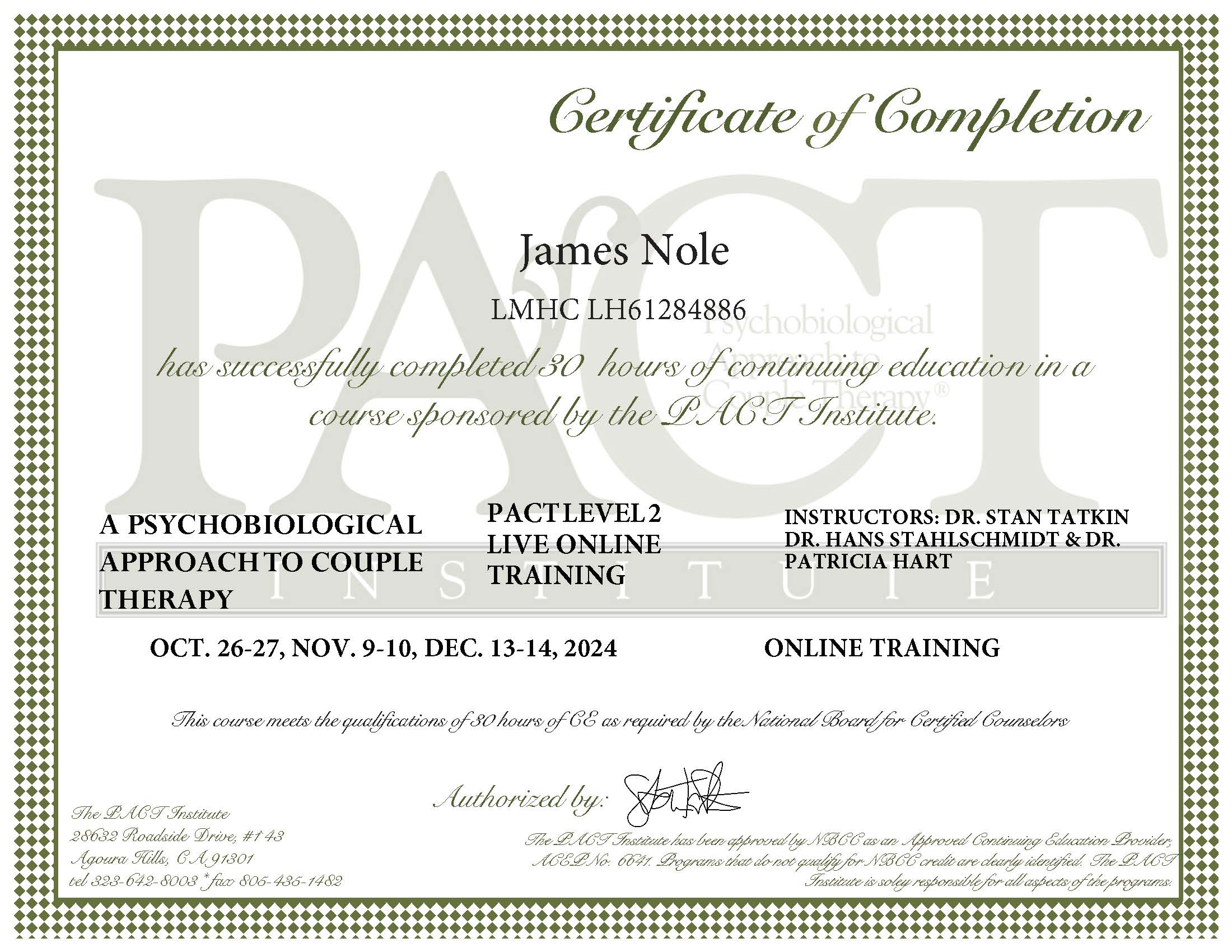
DBR sits alongside my other training in Relational Psychodynamic Therapy, PACT couples therapy, and clinical hypnosis. These approaches inform one another. In my experience, the capacity to work at the deepest brainstem level of trauma through DBR, combined with the relational depth of psychodynamic work and the body-based orientation of clinical hypnosis, allows for a kind of integrated healing that no single modality alone can provide.
Why I Use DBR
What drew me to DBR is the same thing that has drawn me to every approach I practice: a belief that healing has to go where the wound actually lives.
For many of the people I work with, the wound lives somewhere below the story, below the feelings they can name, below the defenses and the patterns and the ways they have learned to survive. It lives in the body's oldest memory, in the places where the shock of what happened never finished moving through.
I came to understand that viscerally through my own life. I know what it is to have a nervous system that stayed braced long after the threat had passed. I know what it is to work hard in therapy and still feel like something remained untouched. That experience shapes how seriously I take the question of depth in trauma work, and why I continue to pursue training in approaches that reach further down.
DBR takes seriously the idea that healing is a natural process, not something imposed from outside, but something the body already knows how to do when given the right conditions. My role in DBR is not to direct or interpret or fix, but to accompany, to help create the conditions in which the nervous system can finish what it started, and to be present with what emerges.
That orientation feels true to me. It is how I understand this work at its best.
Frequently Asked Questions
How is DBR different from EMDR or somatic therapies?
EMDR and somatic therapies are valuable and well-established approaches that work primarily at the level of emotional memory and the body's defensive responses. DBR goes a level deeper, beginning at the brainstem's initial shock response, the layer of physiological reaction that precedes even the emotional material. Many clinicians find DBR useful as a first step before other trauma processing, because clearing the preaffective shock layer makes subsequent emotional work less destabilizing and more accessible.
Will I have to relive my trauma in DBR?
No. DBR does not require detailed recall or retelling of traumatic events. You are asked to hold a very small, carefully chosen piece of a memory or a trigger, just enough to activate the orienting tension in your body, and then to rest attention there. The work stays anchored in the physical sensation of the present moment rather than the content of the past.
Is DBR safe for people with dissociation?
Yes, and in fact DBR was specifically developed with complex and dissociative presentations in mind. The focus on present-moment bodily sensation, particularly the subtle orienting tension in the upper face and neck, provides a grounding anchor that keeps the mind from being swept into high-intensity emotional material or dissociative states. Because I also specialize in DID and dissociative disorders, I bring particular care to this work with dissociative clients.
How many DBR sessions will I need?
This varies considerably depending on the nature and complexity of what you are working on. Some people notice meaningful shifts within a small number of sessions. Others with more complex or layered trauma histories find that the work unfolds over a longer period. We assess this together as we go, and the pacing is always something we decide collaboratively.
Can DBR be used alongside other therapy approaches?
Yes. In my practice, DBR is integrated into a broader therapeutic relationship that may also draw on relational psychodynamic work, clinical hypnosis, and other approaches as the clinical picture calls for them. DBR does not need to stand alone, and often works best when held within an ongoing and trusting therapeutic relationship.
Do you offer DBR via telehealth?
Yes. The randomized controlled trial of DBR was itself conducted via videoconference, demonstrating that the approach can be delivered effectively online. I offer both in-person DBR sessions at my Pioneer Square office in Seattle and telehealth sessions for clients throughout Washington State.
Is DBR only for trauma? Can it help with depression or anxiety?
While DBR was developed primarily as a trauma therapy, the shock and attachment wounding it addresses often underlies depression, chronic anxiety, and a persistent sense of disconnection or numbness. Many clients find that as the brainstem-level shock resolves, their mood, energy, and capacity for aliveness shift in ways that talk-based approaches to depression and anxiety had not fully reached.
Closing
If something in what you have read here speaks to where you are, if you sense that the work you need is happening at a level your current approaches have not yet reached, I would encourage you to reach out.
A free 30-minute consultation is a no-pressure way to share what has been happening, ask questions about DBR, and explore whether this might be the right next step for where you are.
Conditions I treat with this: trauma & C-PTSD therapy, therapy for DID & dissociation.
Related reading: An Introduction to Deep Brain Reorienting (DBR) Therapy; Trauma; and What Is Dissociation?.